
Customer loyalty programs for Small Businesses
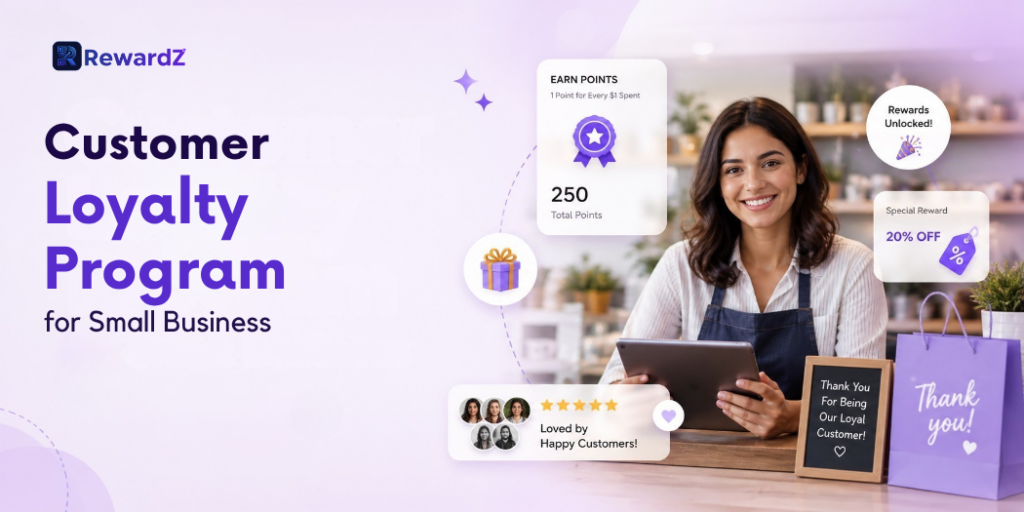
In today’s competitive market, small businesses face a constant challenge—how to retain customers while keeping acquisition costs under control. While marketing campaigns and discounts may attract new users, long-term growth depends on one critical factor:
👉 Customer loyalty
A well-designed customer loyalty program helps businesses build lasting relationships, encourage repeat purchases, and turn customers into brand advocates.
But loyalty programs are no longer just about offering discounts or points. With the rise of digital platforms and SaaS-based solutions, businesses must also consider:
👉 Legal compliance, data privacy, and scalable automation
Ignoring these aspects can lead to trust issues, regulatory risks, and operational inefficiencies.
In this guide, we will explore how small businesses can build effective loyalty programs, understand different types, and ensure compliance while scaling efficiently.
💡 What is a Customer Loyalty Program?
A customer loyalty program is a structured strategy that rewards customers for engaging with your business—whether through purchases, referrals, or other interactions.
As explained in practical frameworks , loyalty programs transform a one-time transaction into an ongoing relationship.
Instead of a simple purchase journey:
- Customer buys → Leaves
A loyalty-driven journey becomes:
- Customer buys → Earns rewards → Returns → Engages again
This shift significantly improves customer retention and lifetime value.
🚀 Why Small Businesses Need Loyalty Programs
Small businesses often operate with limited budgets, making customer retention more important than acquisition.
Key reasons include:
💰 Cost-Effective Growth
Acquiring new customers is expensive. Loyalty programs help retain existing customers at a lower cost.
📢 Word-of-Mouth Marketing
Satisfied customers refer others, especially when rewarded for referrals.
📊 Data-Driven Insights
Loyalty systems provide valuable customer behavior data, helping businesses improve offerings.
🔁 Repeat Purchases
Rewards encourage customers to return and buy more frequently.
👉 As highlighted in your provided content , this creates a continuous engagement loop that drives long-term growth.
🧩 Types of Customer Loyalty Programs
There are multiple ways to structure a loyalty program depending on your business model.
🎯 Points-Based Program
Customers earn points for purchases and redeem them later.
- Simple and widely used
- Works for both online and offline businesses
🤝 Referral Program
Customers are rewarded for bringing new users.
- Encourages organic growth
- Builds trust through recommendations
🏆 Tiered Rewards Program
Customers unlock higher benefits as they engage more.
- Encourages long-term loyalty
- Creates a sense of exclusivity
💵 Cashback Program
Customers receive a percentage back on purchases.
- Motivates higher spending
- Easy to understand
🔐 Membership Program
Customers pay or subscribe for exclusive benefits.
- Builds long-term relationships
- Generates recurring revenue
⚖️ Legal Compliance in Loyalty Programs (India)
This is where most businesses make mistakes.
Loyalty programs involve customer data, rewards, and financial incentives, making compliance critical.
✅ Data Privacy & Protection
Loyalty programs collect:
- Names
- Phone numbers
- Purchase history
Businesses must:
- Store data securely
- Avoid misuse
- Follow data protection laws
✅ Terms & Conditions
Every loyalty program must clearly define:
- How rewards are earned
- Expiry rules
- Redemption conditions
👉 This prevents disputes and builds trust.
✅ Referral Program Compliance
Referral programs must:
- Avoid misleading incentives
- Clearly define eligibility
- Ensure transparency
✅ Taxation & Financial Rules
Rewards such as cashback or credits may have financial implications.
Businesses must ensure:
- Proper accounting
- Compliance with applicable tax rules
✅ Transparent Communication
Avoid claims like:
❌ “Guaranteed rewards without conditions”
Use:
✔️ “Earn rewards based on eligible purchases”
🛠️ How to Build a Customer Loyalty Program
Creating a successful loyalty program requires planning and strategy.
🎯 Step 1: Define Your Goal
Decide what you want to achieve:
- Customer retention
- Increased purchases
- Referrals
🔍 Step 2: Understand Your Customers
Analyze customer behavior to design relevant rewards.
⚙️ Step 3: Choose the Right Program Type
Select from points, referral, cashback, or hybrid models.
💰 Step 4: Set a Budget
Ensure rewards are sustainable and profitable.
💻 Step 5: Use the Right Software
Managing loyalty programs manually is difficult.
A SaaS-based platform (like your Rewardz-style system) helps:
- Track points
- Automate rewards
- Manage users
- Analyze performance
📢 Step 6: Promote & Optimize
Launch your program and continuously improve it based on data.
🤖 Role of Software in Loyalty Program Management
Modern loyalty programs are powered by software platforms.
These systems help businesses:
- Automate reward distribution
- Track customer activity
- Manage referrals
- Provide analytics
👉 Without software, scaling a loyalty program becomes nearly impossible.
📈 Benefits of Customer Loyalty Programs
A well-designed loyalty program delivers measurable results.
✔️ Boost Customer Retention
Customers are more likely to return when rewarded.
✔️ Increase Revenue
Repeat purchases lead to higher sales.
✔️ Improve Customer Lifetime Value (CLV)
Customers spend more over time.
✔️ Build Brand Advocacy
Satisfied customers promote your brand.
✔️ Gain Competitive Advantage
Unique rewards differentiate your business.
🚨 Common Mistakes to Avoid
Many small businesses fail due to poor implementation.
Avoid:
- ❌ Overcomplicated reward systems
- ❌ Lack of transparency
- ❌ Ignoring compliance
- ❌ Not tracking performance
🔮 Future of Loyalty Programs
Loyalty programs are evolving with technology.
Trends include:
- AI-driven personalization
- Omnichannel rewards
- Real-time engagement
- Integration with messaging platforms
👉 Businesses that adopt modern tools will stay ahead.
🎯 Conclusion
Customer loyalty programs are no longer optional—they are essential for sustainable growth.
By combining:
- Smart reward strategies
- Scalable software solutions
- Legal compliance
Small businesses can build stronger relationships, increase revenue, and create long-term success.
Platforms like Rewardz empower businesses to design and manage effective loyalty programs, track customer engagement, and automate rewards seamlessly. At the same time, ZepoteQ enables businesses to build scalable SaaS platforms, websites, and custom software solutions that integrate loyalty systems with compliance at the core.
The key is to move beyond basic discounts and build a structured, compliant, and technology-driven loyalty ecosystem—where platforms like Rewardz drive growth, retention, and long-term business value.