
How to Build a Profitable Loyalty Program in 5 Steps
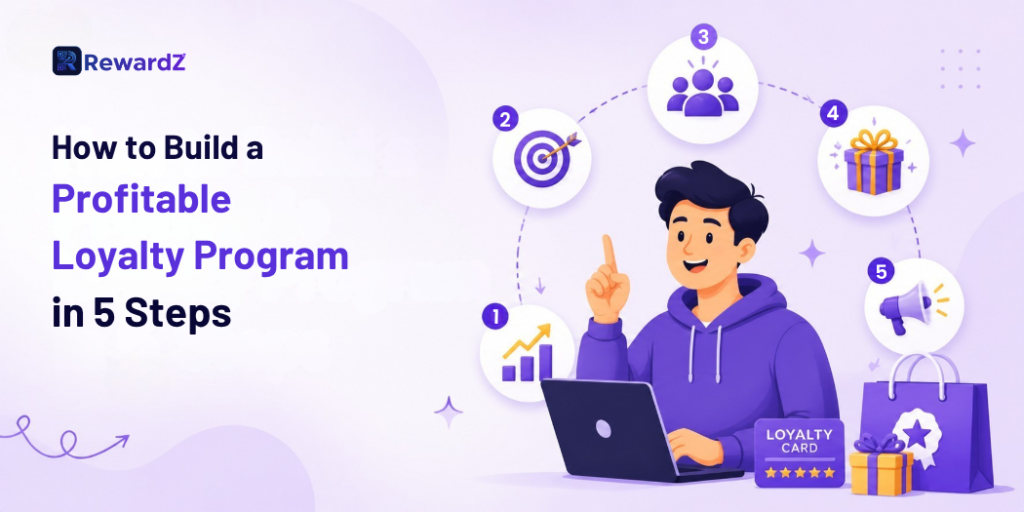
Customer acquisition costs are rising, competition is increasing, and customer attention spans are shorter than ever. In such a competitive business environment, retaining existing customers has become more valuable than constantly chasing new ones.
This is why loyalty programs have become one of the most effective growth strategies for modern businesses.
A well-designed loyalty program does more than offer discounts—it creates stronger customer relationships, encourages repeat purchases, increases customer lifetime value, and improves long-term profitability.
However, many businesses fail to build profitable loyalty programs because they focus only on rewards while ignoring strategy, customer behavior, scalability, and compliance.
The truth is:
👉 A profitable loyalty program is not built around giveaways.
👉 It is built around customer engagement, retention, and smart automation.
In this guide, we’ll explore how businesses can build a profitable loyalty program in five practical steps while ensuring scalability and compliance for long-term success.
🚀 Why Loyalty Programs Matter More Than Ever
Today’s customers have endless options. If businesses fail to engage customers consistently, they quickly move to competitors.
Loyalty programs help solve this problem by creating ongoing value for customers.
Key benefits include:
- Higher customer retention
- Increased repeat purchases
- Better customer engagement
- Stronger brand loyalty
- Improved customer lifetime value
Businesses with strong loyalty systems often outperform competitors because loyal customers spend more and return more frequently.
💡 What Makes a Loyalty Program Profitable?
Many businesses mistakenly think profitability comes from offering large rewards.
In reality, profitable loyalty programs focus on:
- Encouraging repeat behavior
- Increasing customer engagement
- Creating emotional connection
- Improving retention efficiency
A successful loyalty program should generate more revenue than it costs to operate.
That means:
- Rewards should encourage profitable actions
- Customers should stay engaged long-term
- The program should scale efficiently
🧩 Step 1: Define Clear Business Goals
Before launching a loyalty program, businesses must clearly define what they want to achieve.
Without clear goals, even attractive reward systems fail.
Common loyalty program goals include:
- Increasing repeat purchases
- Improving customer retention
- Encouraging referrals
- Boosting average order value
- Enhancing customer engagement
For example:
- A retail store may focus on repeat purchases
- A SaaS platform may focus on subscription retention
- An ecommerce brand may focus on reducing cart abandonment
👉 The loyalty structure should align directly with business objectives.
🔍 Understanding Customer Behavior
Customer research is essential before designing rewards.
Businesses should analyze:
- Purchase frequency
- Spending patterns
- Preferred products
- Customer engagement habits
This helps create rewards that customers actually value.
A loyalty program becomes profitable only when it motivates customer behavior that benefits the business.
🛠️ Step 2: Choose the Right Loyalty Program Model
There is no one-size-fits-all loyalty model.
The right structure depends on your business type, customer base, and growth goals.
🎯 Points-Based Programs
Customers earn points for purchases and redeem them later.
Benefits:
- Easy to understand
- Encourages repeat purchases
- Works well for ecommerce and retail
🤝 Referral Programs
Customers receive rewards for bringing new customers.
Benefits:
- Reduces acquisition costs
- Builds organic growth
- Encourages advocacy
🏆 Tiered Loyalty Programs
Customers unlock better rewards as they engage more.
Benefits:
- Encourages long-term engagement
- Creates exclusivity
- Increases customer retention
💵 Cashback Programs
Customers receive cashback or store credit.
Benefits:
- Encourages higher spending
- Creates immediate value perception
🔐 Membership-Based Programs
Customers subscribe for premium benefits.
Benefits:
- Generates recurring revenue
- Strengthens long-term loyalty
⚖️ Step 3: Build Compliance & Transparency Into the Program
One of the biggest mistakes businesses make is ignoring legal and compliance considerations.
Loyalty programs collect customer data and involve reward systems, making compliance extremely important.
🔒 Data Privacy & Customer Information
Businesses often collect:
- Names
- Phone numbers
- Email addresses
- Purchase history
This data must be handled responsibly.
Businesses should:
- Protect customer information
- Use secure systems
- Avoid unauthorized data sharing
📜 Terms & Conditions
Every loyalty program should clearly define:
- Reward eligibility
- Expiry rules
- Redemption conditions
- Referral policies
Transparency helps build trust and prevents disputes.
🚫 Avoid Misleading Claims
Avoid statements such as:
❌ “Unlimited rewards guaranteed”
❌ “Free rewards without conditions”
Instead use:
✔️ “Earn rewards on eligible purchases”
✔️ “Benefits based on loyalty activity”
📱 Step 4: Use Scalable Loyalty Program Software
Managing loyalty programs manually becomes difficult as businesses grow.
This is where technology becomes essential.
Modern loyalty software helps businesses:
- Track customer points
- Automate rewards
- Manage referrals
- Analyze customer behavior
- Personalize offers
A scalable platform ensures that the loyalty program can grow with the business.
🤖 Role of Automation in Loyalty Programs
Automation improves both efficiency and customer experience.
Businesses can automate:
- Reward notifications
- Referral tracking
- Birthday offers
- Purchase-based rewards
- Engagement reminders
This keeps customers engaged without increasing operational workload.
📊 Step 5: Monitor, Optimize & Improve Continuously
A loyalty program should never remain static.
Businesses must continuously track:
- Customer participation
- Redemption rates
- Repeat purchase frequency
- Revenue impact
Analytics help identify:
- What rewards work best
- Which customers are most engaged
- Where improvements are needed
The most profitable loyalty programs evolve based on customer behavior and business goals.
🎯 Simple Final Understanding
Rewardz helps healthcare and pharma companies ensure that their products are authentic and safe for patients. Rewardz, powered by ZepoteQ, transforms healthcare engagement into a connected and loyalty-driven experience.
It keeps patients engaged through meaningful communication and reward-based interactions.
It also enables organizations to educate users and collect feedback, creating a complete engagement system.
Together, this creates a smarter, more connected, and trust-driven healthcare experience.
🚨 Common Mistakes Businesses Should Avoid
Even good loyalty programs fail when implemented poorly.
Common mistakes include:
- ❌ Overcomplicated reward systems
- ❌ Lack of transparency
- ❌ Ignoring customer preferences
- ❌ Offering unsustainable rewards
- ❌ Not using automation
Simplicity and clarity are key to long-term success.
🌍 Why Small Businesses Need Loyalty Programs
Loyalty programs are not only for large brands.
Small businesses benefit significantly because they:
- Improve customer retention
- Reduce marketing costs
- Encourage word-of-mouth growth
- Build stronger relationships
Even simple programs can create major long-term impact.
📈 Future of Loyalty Programs
Modern loyalty programs are evolving rapidly.
Emerging trends include:
- AI-driven personalization
- Omnichannel loyalty systems
- Real-time engagement
- Gamified rewards
- Integration with messaging platforms
Businesses that adopt scalable and technology-driven loyalty systems will stay ahead of competitors.
❓ FAQ's
1. What is a profitable loyalty program?
A profitable loyalty program encourages repeat purchases while generating more revenue than it costs to operate.
2. Which loyalty program model works best for small businesses?
Points-based and referral programs are often simple and effective for small businesses.
3. Why is compliance important in loyalty programs?
Compliance protects customer data and ensures transparency in rewards and promotions.
4. Can loyalty programs increase customer retention?
Yes, they encourage repeat engagement and long-term customer relationships.
5. Do businesses need software to manage loyalty programs?
Yes, scalable software helps automate rewards, track engagement, and improve efficiency.
6. What are the biggest mistakes in loyalty programs?
Yes, if businesses follow proper data protection and privacy compliance practices.
7. How do loyalty programs increase revenue?
They encourage repeat purchases, referrals, and higher customer lifetime value.